The single fact that decides your booking
Search for a Grand Canyon helicopter tour and you will be shown flights ranging from $269 to
well over $1,800, apparently for the same thing. They are not the same thing. The prices make
sense the moment you understand that “the Grand Canyon” refers to two separate destinations
roughly 120 miles apart, run by different authorities, under different rules.
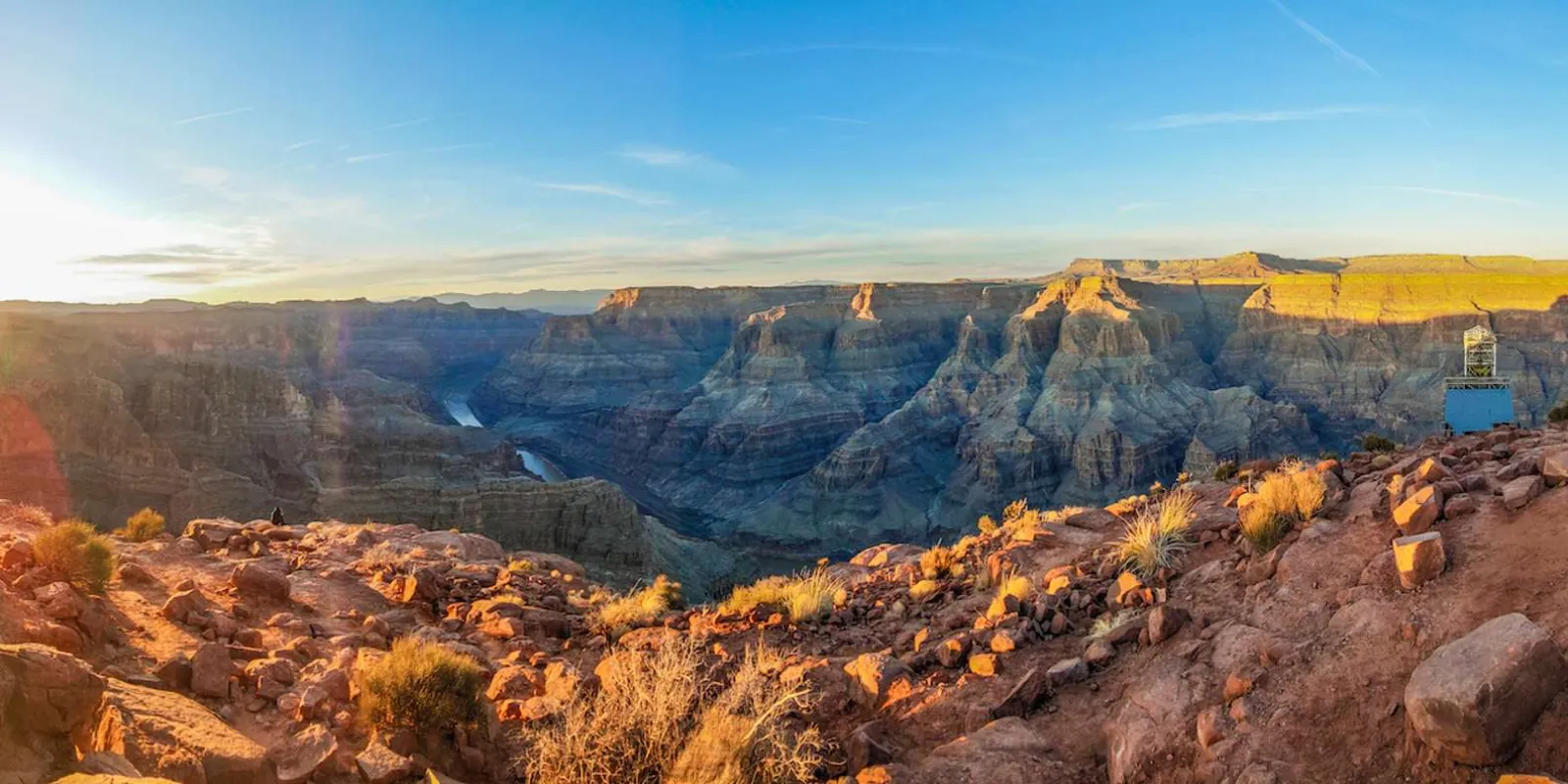
Grand Canyon West sits on Hualapai tribal land, outside Grand Canyon National Park. It is
about 120 miles from Las Vegas, which is why nearly every helicopter tour advertised in Vegas
goes there. Crucially, because it is not national park airspace, helicopters are permitted to
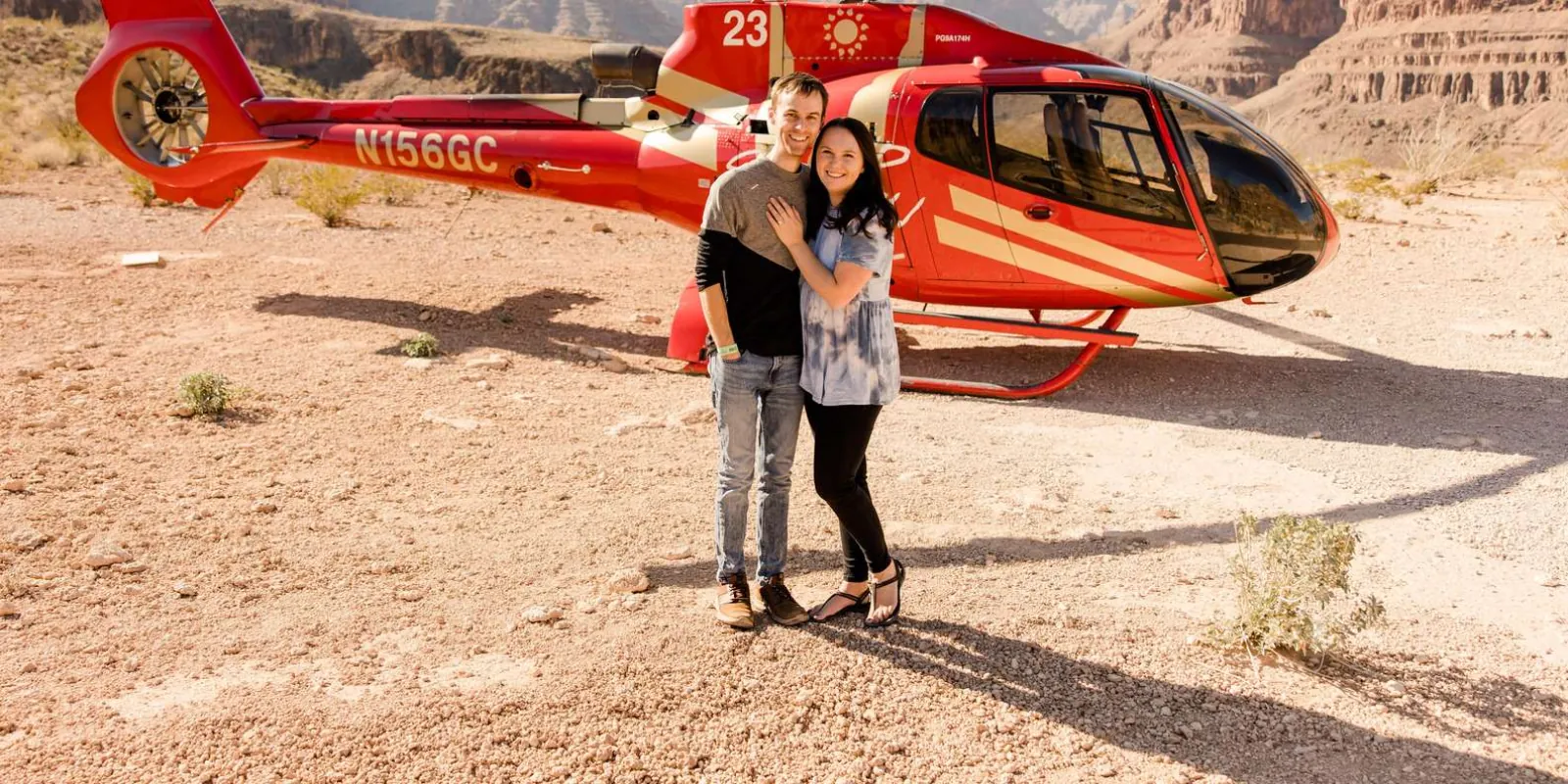
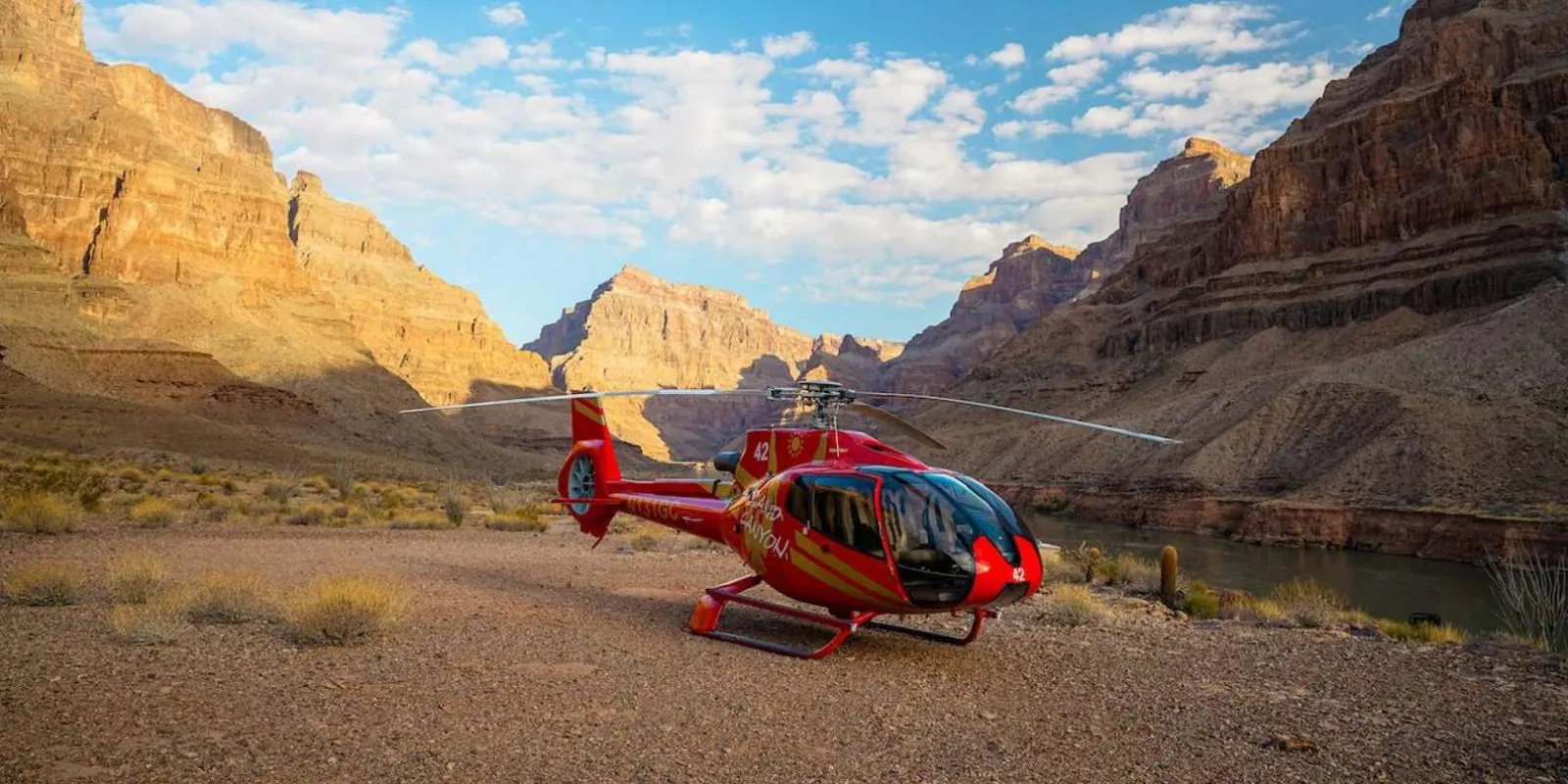
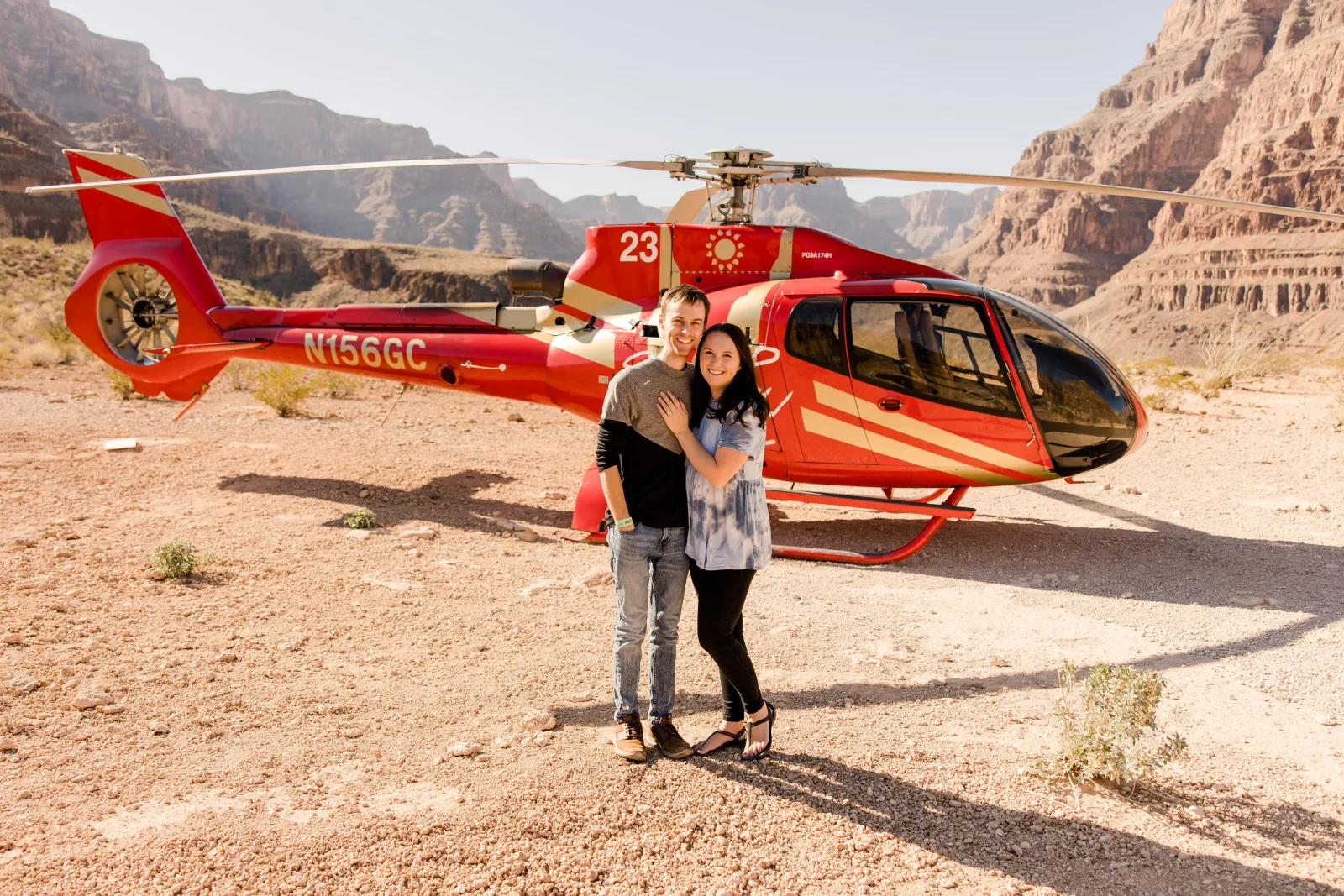
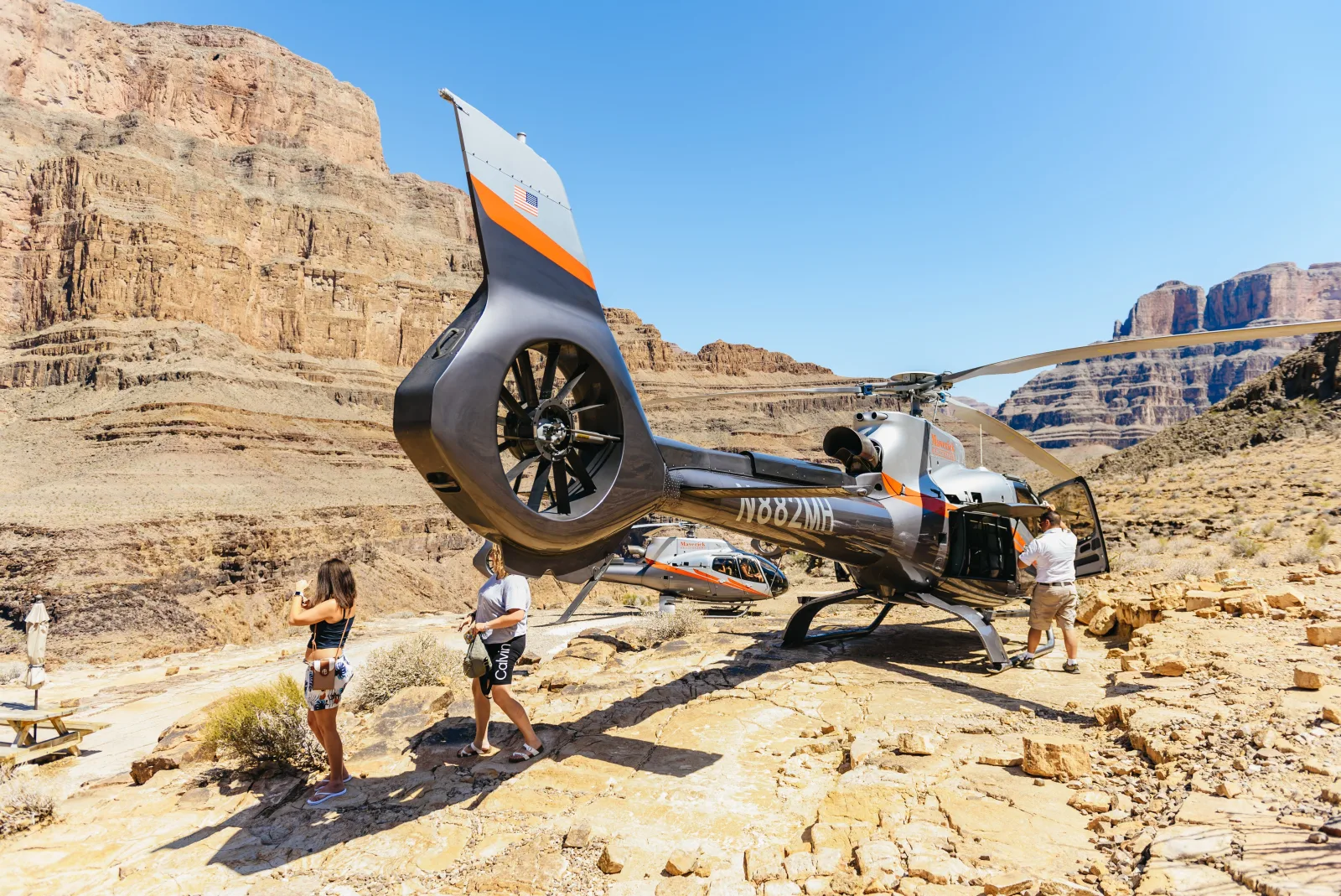
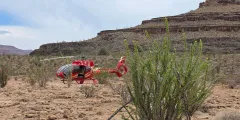
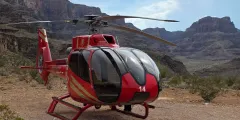
descend below the rim and land on the canyon floor. Every canyon-floor landing tour in
existence flies here. The Skywalk — the glass horseshoe cantilevered out over the drop — is
here too.
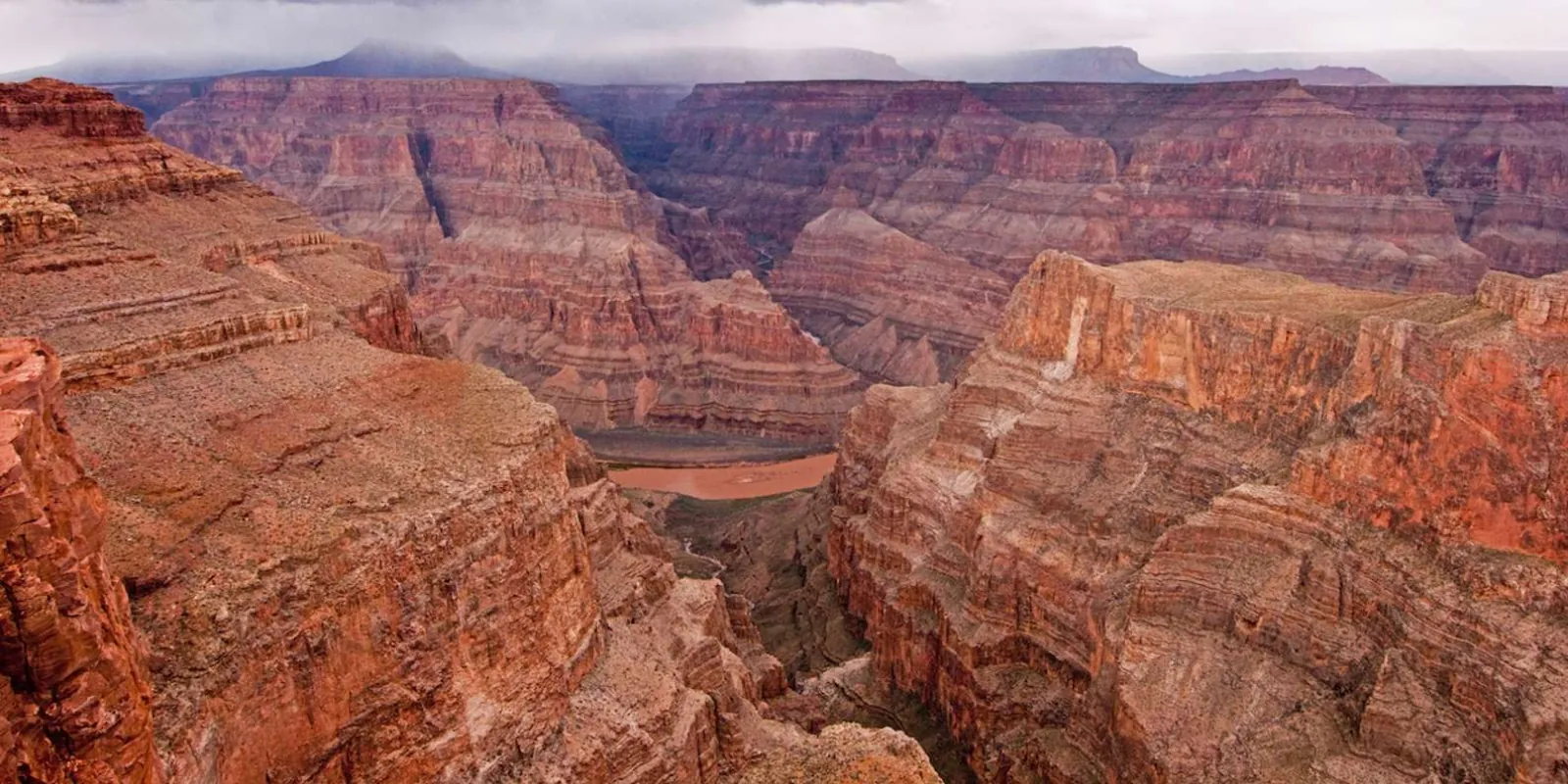
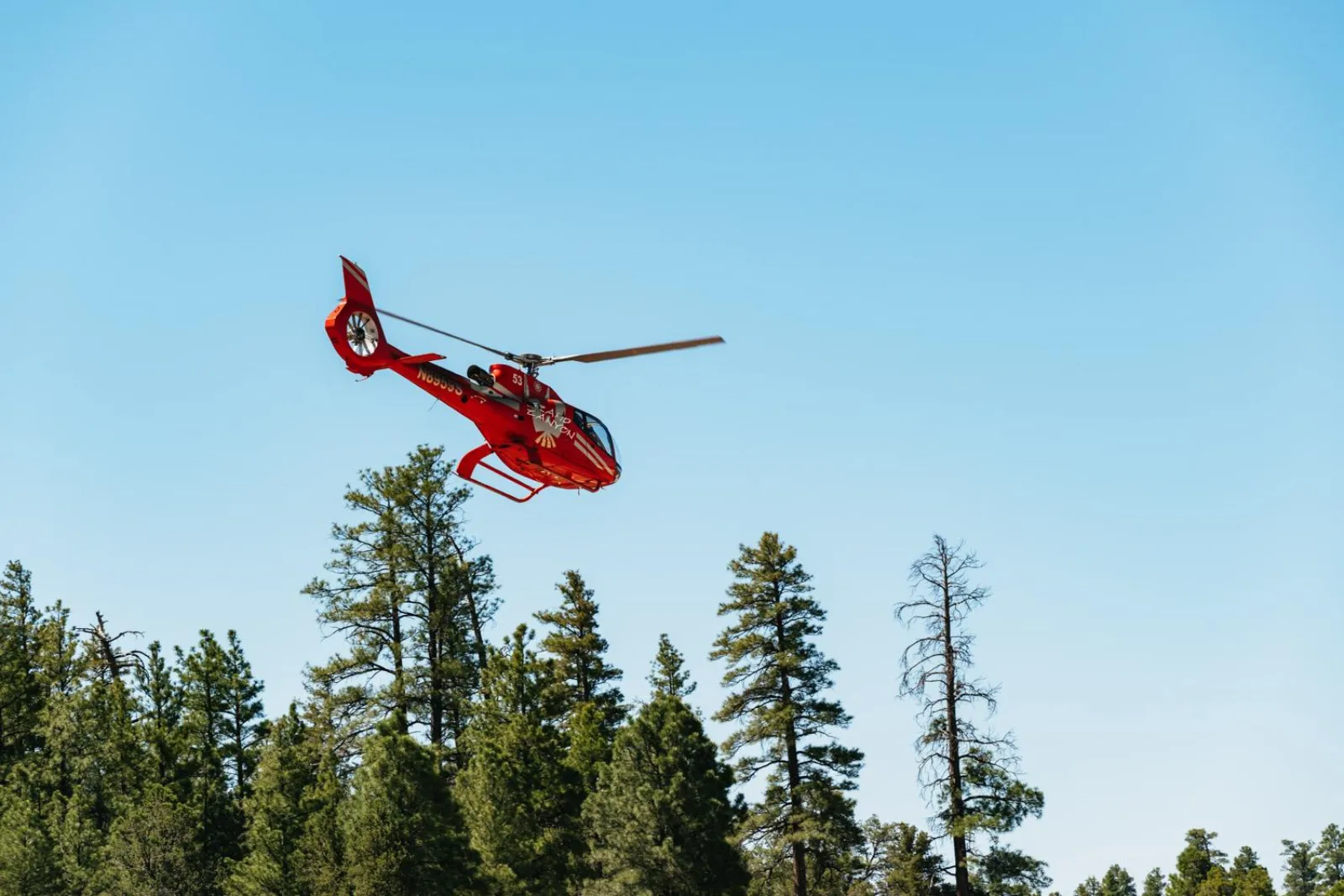
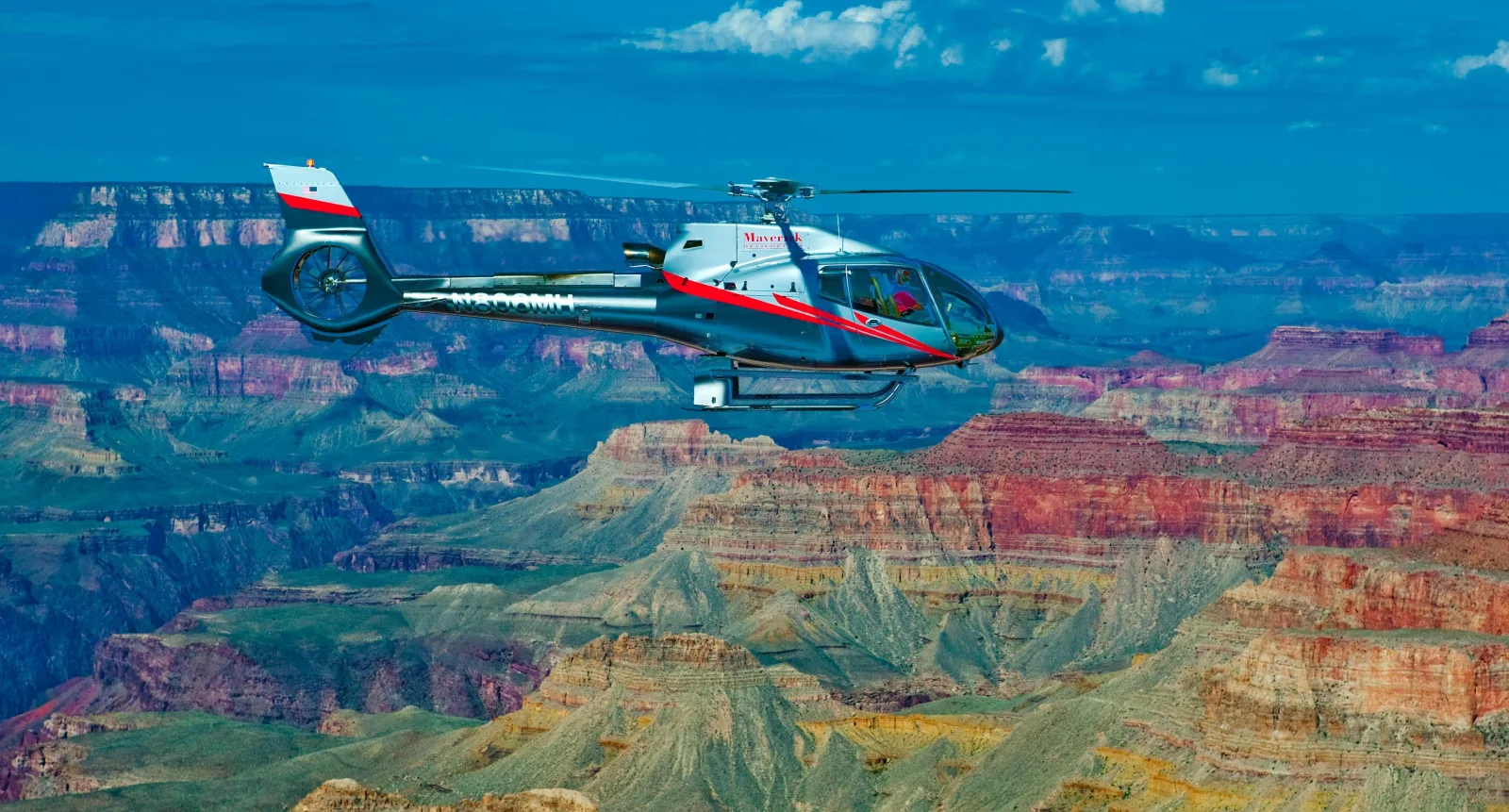
The South Rim is Grand Canyon National Park proper: deeper, wider, banded in the reds and
ochres that appear in essentially every famous photograph of the canyon. Air tours here depart
from Grand Canyon Airport at Tusayan. They are scenic flights, and they always will be —
landing inside the national park is not permitted for commercial air tours, so no operator
anywhere can sell you one, at any price.
That asymmetry is the whole decision. A landing tour cannot show you the postcard canyon. A
South Rim flight cannot put you on the canyon floor. If you would like help matching that to
your own trip, our guide to
which Grand Canyon helicopter tour to book
walks through it tour by tour.
Why the Las Vegas tours cost double
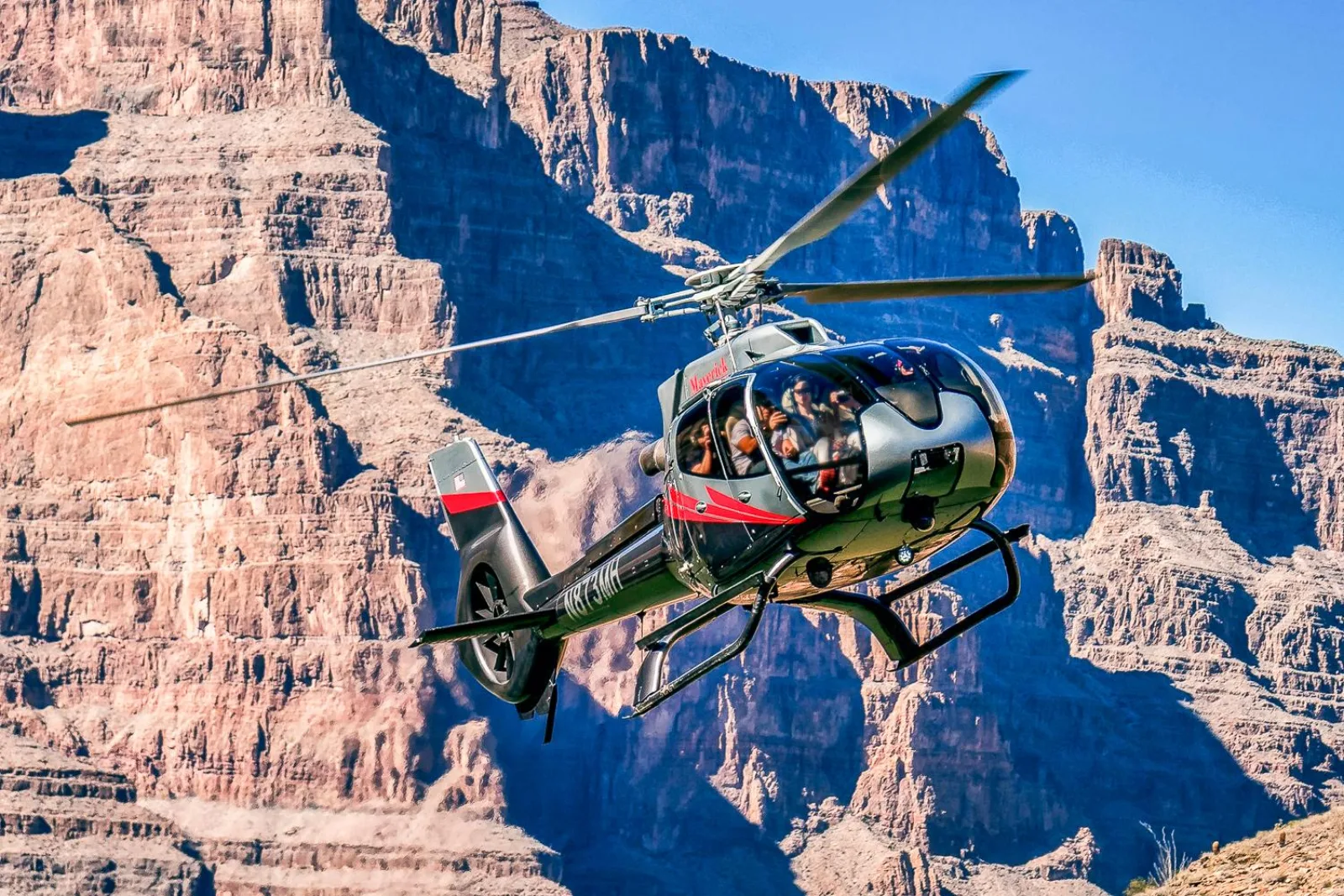
Compare two flights that land in exactly the same place. Maverick’s
Grand Canyon West canyon floor landing
is $279 and takes 40 minutes. Papillon’s
landing tour with Las Vegas transfers
is $489 and takes four and a half hours. Both set you down on the canyon floor near the
Colorado River.
The difference is not the flying. It is that the second price includes hotel pickup from the
Las Vegas Strip, the road transfer to the air terminal at Boulder City, catering on the canyon
floor, and the ride back. Of those 4.5 hours, roughly 75 minutes is airborne and about 30
minutes is spent on the ground in the canyon. The rest is logistics you are paying somebody
else to absorb.
So the honest rule is this: if you are staying in Las Vegas without a car, the
Vegas departures are worth their premium,
because the alternative is a 250-mile round trip you organise yourself. If you are already at
Grand Canyon West — on a coach tour, driving through Arizona, or staying nearby — you are
paying twice for transport you do not need.
What “lands in the canyon” actually means
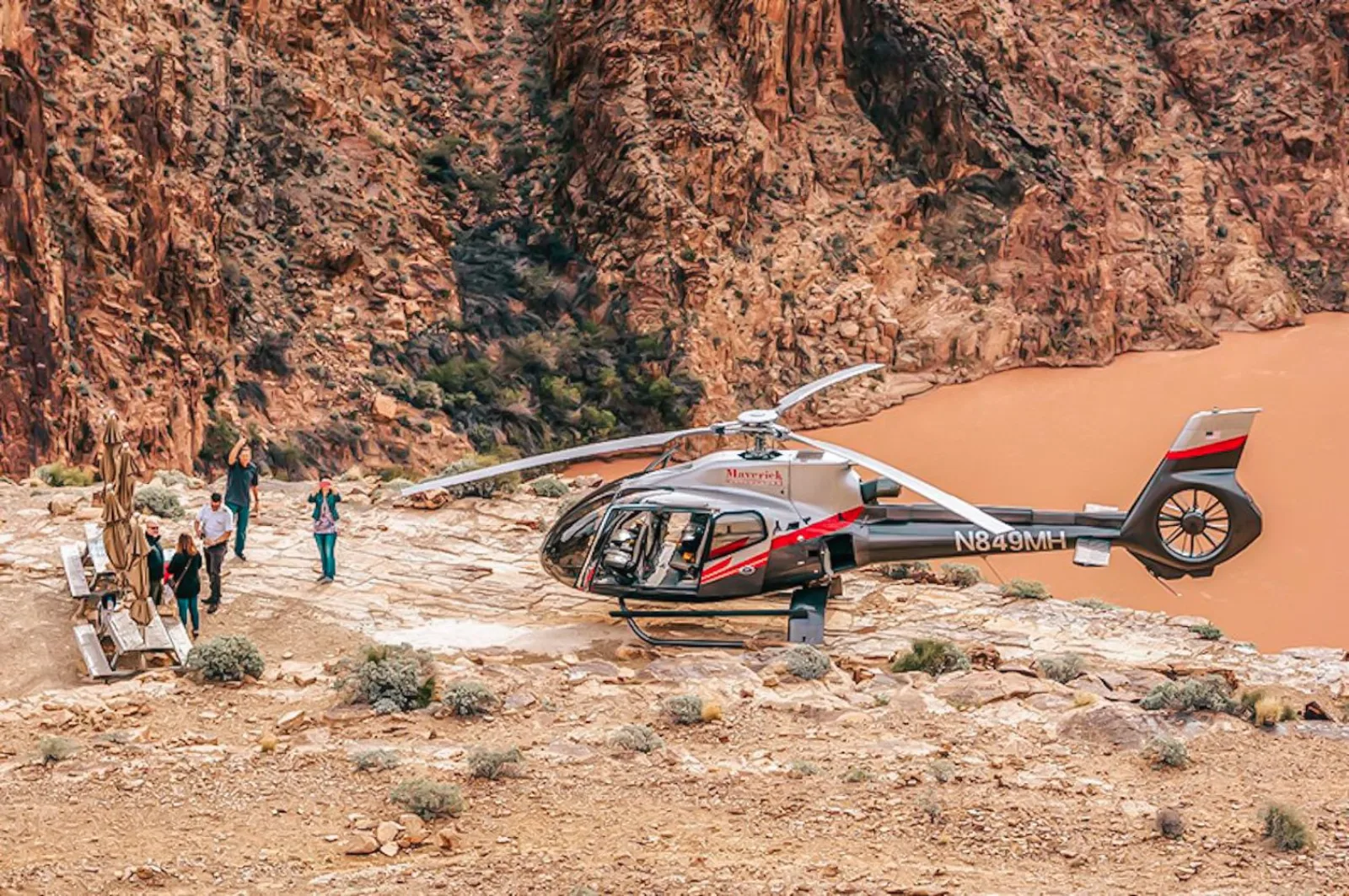
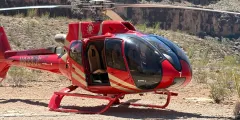
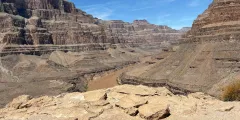
It is worth being precise, because the marketing is not. Landing tours descend around 3,500
feet below the rim to a private plateau roughly 300 feet above the Colorado River. You get
20 to 30 minutes on the ground depending on the operator, usually with a champagne toast and
light refreshments.
That is not the bottom of the canyon in the hiking sense, and you are not at the river’s edge.
What you get is the thing photographs never convey: standing underneath walls a mile high, in
a place reachable only by air or by a multi-day expedition. Most people who describe a Grand
Canyon helicopter tour as the best thing they did in Nevada are describing those 20 minutes.
Be equally clear about what a Skywalk tour is. The
Skywalk Express lands at
the West Rim — at the top — and includes expedited admission to the glass bridge. It does not
land on the canyon floor. You cannot get both on one flight, and the operators do not go out
of their way to say so.
Choosing a time of day, and a season
Morning departures have the calmest, clearest air. Desert thermals build through the afternoon,
which makes for a bumpier ride, and summer haze cuts visibility. Sunset flights are the better
photograph — low light across the canyon walls, and on the Las Vegas routes the Strip lighting
up beneath you on the way home — but they are the first slots to sell out.
Seasonally, spring and autumn are the sweet spot: stable air, moderate temperatures on the
canyon floor, and reliable operating days. July through September is monsoon season in northern
Arizona, when afternoon thunderstorms cancel flights outright. Winter flies well and is quieter,
though the canyon floor is genuinely cold. Our
guide to the best time for a Grand Canyon helicopter tour
goes month by month.
Practical things that catch people out
Helicopter seating is assigned at check-in on legal weight-and-balance limits, not on booking
order — so a party of four is not guaranteed to sit together, and passengers over roughly 275
to 300 pounds are required to buy a second seat. Every adult passenger needs government-issued
photo ID. Most flights need a minimum of four passengers to operate, so a thinly booked
departure can be moved, which is a good argument against leaving this to your final afternoon.
And if you are flying from the South Rim, budget for the national park entrance fee on top of
your tour. Since 1 January 2026 the National Park Service has also charged non-US residents
aged 16 and over an additional $100 per person, and it applies on commercial tours as well as
private visits. Grand Canyon West, being tribal land, sits outside that scheme entirely — one
more way the two canyons diverge.
Every tour listed on this site offers free cancellation up to 24 hours before departure, so
booking early costs you nothing but secures the slot and the weather margin.